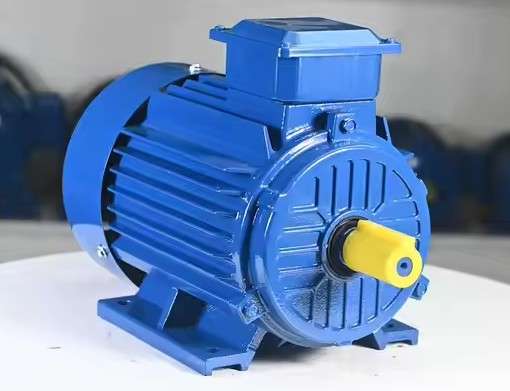
The asynchronous motor, also known as the induction motor, is one of the most important inventions in the history of electrical engineering. From industrial production lines to HVAC systems and pumping stations, asynchronous motors power a vast portion of modern infrastructure. Their simplicity, durability, and cost-efficiency have made them the backbone of mechanical motion in residential, commercial, and industrial environments.
The History of the Asynchronous Motor
The development of the asynchronous motor dates back to the late 19th century, during the rapid expansion of alternating current (AC) power systems. Nikola Tesla’s work on rotating magnetic fields laid the foundation for the induction motor, which operates without brushes or mechanical commutators.
Unlike DC motors, asynchronous motors rely on electromagnetic induction between the stator and rotor. This innovation eliminated many mechanical wear components and significantly increased reliability. As AC power grids expanded, induction motors quickly became the preferred solution for industrial machinery due to their efficiency and low maintenance requirements.
How an Asynchronous Motor Works
An asynchronous motor operates on the principle of electromagnetic induction. When AC power is applied to the stator windings, a rotating magnetic field is created. This magnetic field induces current in the rotor, which in turn generates its own magnetic field. The interaction between these magnetic fields produces torque.
The term “asynchronous” refers to the fact that the rotor does not rotate at the exact same speed as the stator’s magnetic field. There is always a small difference in speed known as “slip,” which is necessary for torque production.
Main components include:
- Stator: Generates the rotating magnetic field.
- Rotor: Receives induced current and produces motion.
- Bearings: Support smooth mechanical rotation.
- Cooling system: Maintains safe operating temperature.
Why Asynchronous Motors Became Industry Standard
Asynchronous motors are widely used because they are:
- Robust and mechanically simple
- Cost-effective compared to synchronous motors
- Low maintenance
- Highly reliable in continuous operation
- Compatible with Variable Frequency Drives (VFDs)
Their rugged design makes them ideal for heavy-duty industrial applications where reliability is critical.
Applications in Residential, Commercial, and Industrial Environments
In residential settings, asynchronous motors are commonly found in:
- HVAC systems
- Air compressors
- Water pumps
- Appliances
In commercial buildings, they power:
- Ventilation systems
- Elevators
- Refrigeration equipment
- Lighting control systems
In industrial facilities, asynchronous motors drive:
- Conveyor systems
- Production machinery
- Pumps and compressors
- Material handling equipment
Proper installation and maintenance are essential to ensure long-term reliability. For professional support, explore our Industrial Electrical Services.
Common Issues and Preventive Maintenance
Although asynchronous motors are highly durable, failures can occur due to:
- Bearing wear
- Insulation breakdown
- Overheating
- Voltage imbalance
- Harmonic distortion
Routine inspection, thermal imaging, vibration analysis, and insulation testing significantly reduce unexpected downtime. Preventive strategies can be implemented through our PM and Electrical Inspection services.
Integration with Variable Frequency Drives (VFD)
Modern asynchronous motors often operate with VFD systems to improve efficiency and control speed. VFDs reduce energy consumption, lower mechanical stress, and optimize system performance.
Improper installation or poor grounding can lead to overheating, harmonic distortion, and premature motor failure. Professional configuration and load assessment are critical for stable operation.
For upgrades and system optimization, visit our Electrical Upgrades page.
Why Professional Electrical Support Matters
Installing, servicing, or troubleshooting asynchronous motors requires proper load calculation, wiring configuration, grounding compliance, and protection device coordination.
A licensed electrical contractor ensures:
- Code-compliant installation
- Accurate breaker sizing
- Proper overload protection
- Safe commissioning procedures
Whether you manage a manufacturing facility, commercial property, or industrial operation in the GTA, VVA Electrical provides expert support for motor systems and electrical infrastructure.
Learn more about our Commercial Electrical Services and Residential Electrical Services to ensure your systems operate safely and efficiently.

Electrical Safety Authority Ontario

